The Retail Signage Opportunity
Singapore's retail sector faces a dual challenge: competing with the convenience of e-commerce while justifying the premium costs of physical retail space. In this environment, every square metre of store space needs to work harder, and digital signage has emerged as one of the most effective tools for maximising the impact of physical retail environments.
According to a study by Intel, digital signage captures 400% more views than static displays. More importantly, 80% of brands that deploy digital signage report an increase of up to 33% in additional sales. For Singapore retailers operating in high-rent locations like Orchard Road, Marina Bay Sands, or Jewel Changi Airport, that kind of uplift can make a significant difference to the bottom line.
Here are five proven strategies for leveraging digital signage to boost sales and customer engagement in your retail space.
1. Create Immersive Storefront Experiences
Your storefront is your most valuable advertising real estate. A high-brightness digital display in your shop window captures the attention of passing foot traffic far more effectively than a static poster. In Singapore's shopping districts, where pedestrian traffic is dense and competition for attention is fierce, a dynamic storefront display can be the difference between a customer walking in or walking past.
High-brightness displays rated at 2,500–3,500 cd/m² are essential for window-facing installations, as they need to remain visible even under direct sunlight. Goodview's high-brightness window displays feature 4K Ultra HD resolution and a 76.9% DCI-P3 colour gamut, ensuring that your brand content looks vibrant and true-to-life regardless of ambient lighting conditions.
The content strategy for storefront displays should focus on bold visuals and minimal text. Use full-screen product imagery, short video loops (15–30 seconds), and clear calls to action. Rotate content frequently to give repeat passersby a reason to look again.
2. Deploy Interactive Touch Kiosks for Self-Service
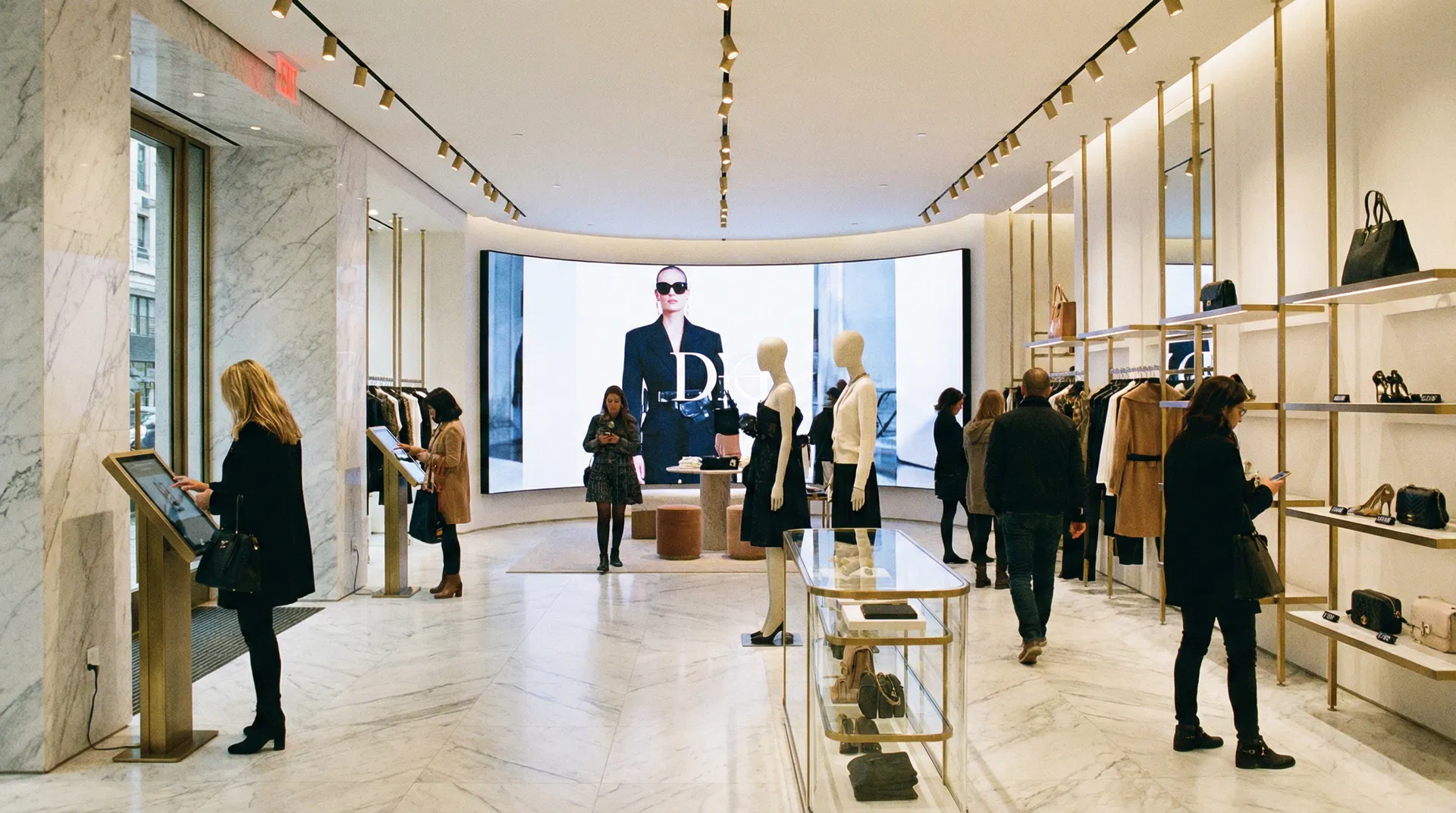
Interactive touch kiosks transform passive shoppers into active participants. In a fashion retail environment, a kiosk can allow customers to browse the full product catalogue (including items not physically stocked in that location), check size availability, and even place orders for home delivery. In a cosmetics store, an interactive display can provide virtual try-on experiences or personalised product recommendations.
Goodview's interactive touchscreen displays feature 10-point capacitive touch with a 3ms response time, ensuring a fluid, responsive experience that meets the expectations of smartphone-native consumers. The built-in Android platform supports custom applications, and WiFi/4G connectivity enables real-time integration with inventory and CRM systems.
The key to successful kiosk deployment is placement. Position kiosks near high-traffic areas within the store, such as the entrance or near popular product displays. Ensure the interface is intuitive — if a customer needs more than 5 seconds to figure out how to use it, they will walk away.
3. Use Dynamic Pricing and Promotions
Unlike static signage, digital displays can change content instantly based on time of day, inventory levels, or even external factors like weather. This enables sophisticated promotional strategies that were previously impossible with printed materials.
For example, a fashion retailer can programme digital displays to highlight raincoats and umbrellas during rainy weather, or promote sunglasses and hats during sunny periods. A grocery store can automatically display discounted prices on items approaching their sell-by date. A electronics retailer can run flash sales during traditionally slow periods to drive foot traffic.
Cloud-managed content systems make this level of dynamic pricing practical even for multi-store operations. A single marketing manager can push a promotional update to displays across 50 locations in minutes, ensuring consistent messaging and rapid response to market conditions.
4. Enhance the In-Store Journey with Wayfinding
Large retail spaces — department stores, shopping centres, and flagship stores — benefit enormously from digital wayfinding displays. Interactive maps help customers navigate to specific departments or products, reducing frustration and increasing the likelihood of purchase.
In Singapore's multi-level shopping centres, digital directories at escalator landings and lift lobbies serve a dual purpose: they help shoppers find their destination, and they provide valuable advertising space for tenants. The content can be updated remotely to reflect new store openings, temporary pop-ups, or seasonal events.
Wayfinding displays also generate valuable data. By tracking which departments or stores customers search for most frequently, centre management can make informed decisions about tenant placement, marketing spend allocation, and event programming.
5. Build Brand Atmosphere with Video Walls
A well-designed video wall transforms a retail space from a transactional environment into an experiential destination. Luxury brands have long understood this — flagship stores for fashion, automotive, and technology brands routinely feature large-format video walls that immerse customers in the brand story.
The key is to treat the video wall as an integral part of the store design, not an afterthought. Work with your interior designer and digital signage partner during the planning phase to ensure the video wall complements the store's architecture, lighting, and customer flow.
Content for retail video walls should prioritise brand storytelling over product promotion. Cinematic brand films, behind-the-scenes footage, and lifestyle imagery create an emotional connection with customers that drives long-term loyalty. Reserve product-specific promotions for smaller, strategically placed displays throughout the store.
Measuring Retail Signage ROI
To quantify the impact of your digital signage investment, establish baseline metrics before installation and track changes over time. Key performance indicators include foot traffic conversion rate (percentage of passersby who enter the store), average transaction value, dwell time in specific zones, and customer satisfaction scores.
Many modern digital signage systems can integrate with anonymous footfall counting cameras and WiFi analytics to provide detailed insights into customer behaviour. This data enables continuous optimisation of content strategy and display placement.
Partner with Goodview Singapore
Goodview offers a comprehensive range of retail digital signage solutions, from high-brightness window displays and interactive touch kiosks to seamless LED video walls. Our Singapore team provides end-to-end support including site assessment, hardware recommendation, professional installation, and cloud content management.
Visit our showroom to experience our retail display solutions in person, or contact us for a free consultation tailored to your retail environment.