The Outdoor Signage Challenge
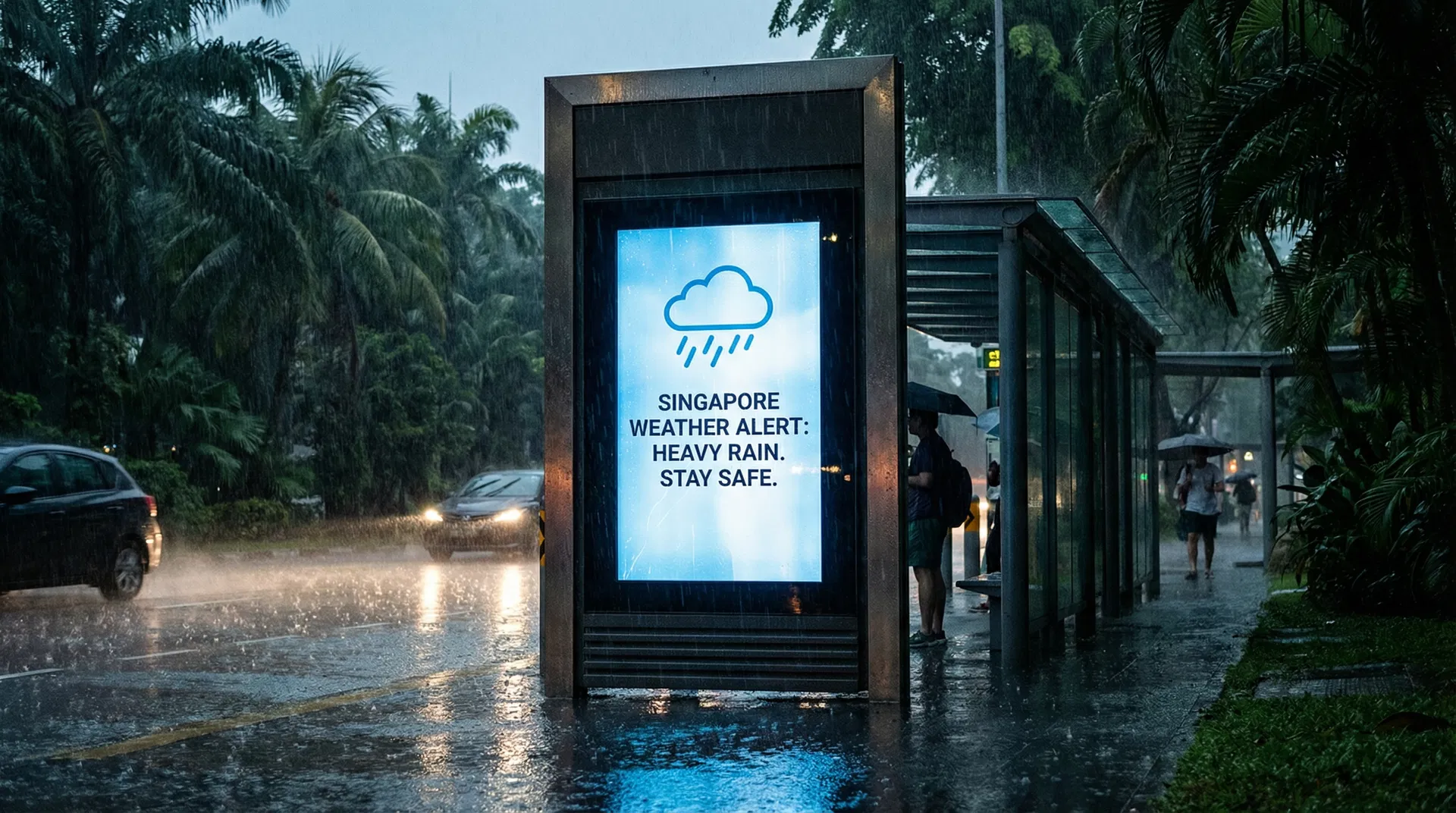
Deploying digital signage outdoors in Singapore is fundamentally different from indoor installations. The island's equatorial climate — characterised by average temperatures of 25–31°C, relative humidity of 70–90%, and approximately 167 rainy days per year — creates an environment that will quickly destroy consumer-grade or even standard commercial displays.
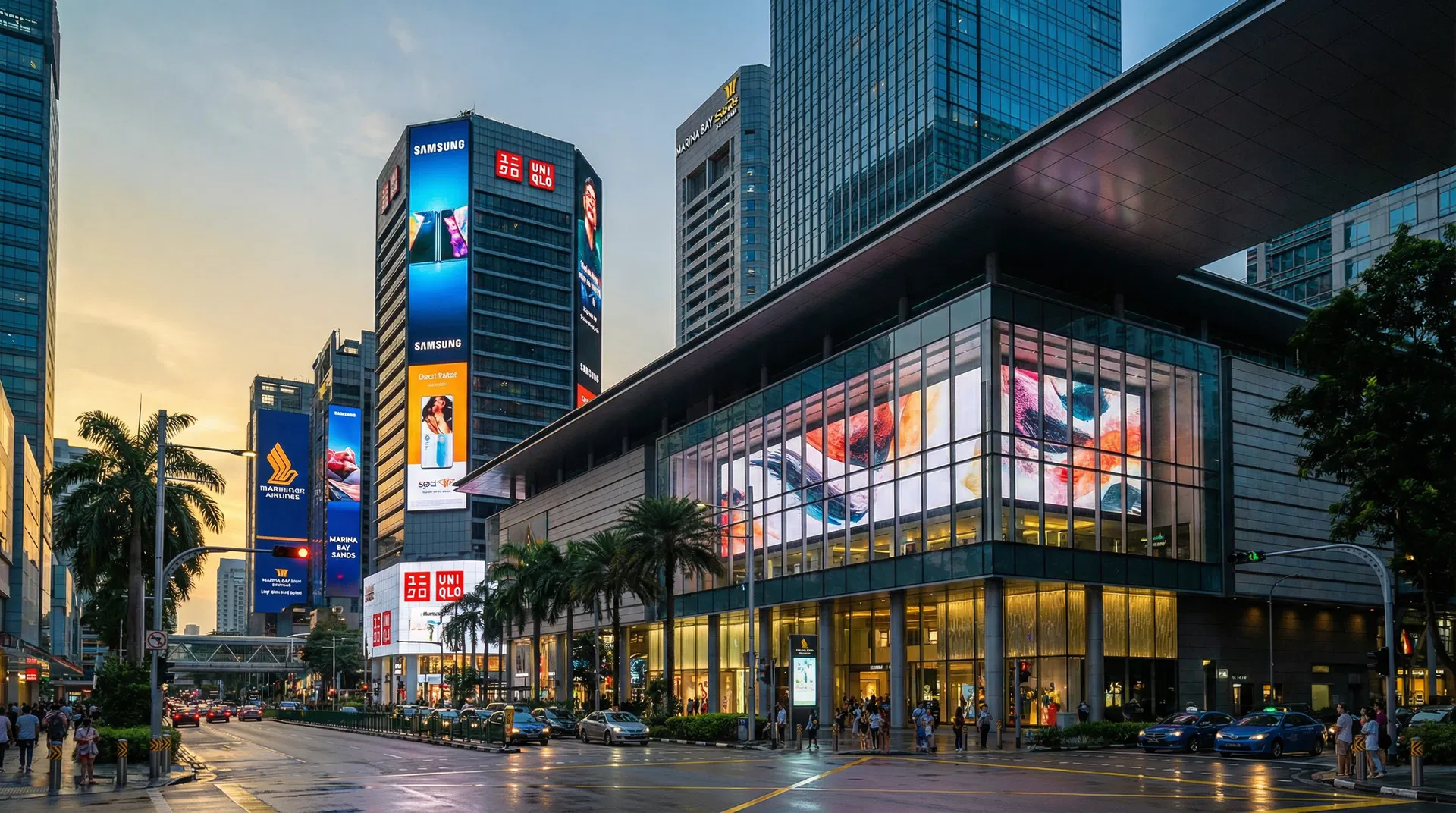
Yet the demand for outdoor digital signage continues to grow. Bus stops, MRT stations, building facades, petrol stations, and outdoor dining areas all benefit from dynamic digital content. The key is selecting hardware specifically engineered for tropical outdoor conditions and following best practices for installation and maintenance.
Understanding IP and IK Ratings
The most important specifications for outdoor digital signage are the IP (Ingress Protection) and IK (Impact Protection) ratings.
The IP rating consists of two digits. The first digit (0–6) indicates protection against solid particles like dust, while the second digit (0–9) indicates protection against water. For Singapore's outdoor environment, a minimum rating of IP56 is recommended — meaning the display is protected against dust ingress and powerful water jets from any direction. For installations exposed to direct rainfall without any overhead shelter, IP65 or higher is preferable.
The IK rating measures resistance to mechanical impact, rated from IK00 (no protection) to IK10 (protection against 20 joules of impact, equivalent to a 5kg mass dropped from 40cm). For public-facing outdoor installations, IK10 is recommended to protect against vandalism and accidental impact.
Goodview's full outdoor digital signage range carries IK10 and IP56 ratings, ensuring reliable operation in Singapore's demanding outdoor environment.
Brightness: The Visibility Factor
Outdoor displays must compete with direct sunlight, which can produce ambient light levels exceeding 100,000 lux on a clear day. A standard indoor commercial display producing 350–500 nits of brightness will appear completely washed out in these conditions.
For outdoor installations in Singapore, a minimum brightness of 2,500 cd/m² is recommended for shaded or semi-outdoor locations. Displays facing direct sunlight require 3,500 cd/m² or higher to maintain legible content throughout the day.
Equally important is the display's ability to adjust brightness automatically. An ambient light sensor should dim the display at night to avoid light pollution and reduce power consumption, then ramp up to full brightness during daylight hours. This not only improves the viewing experience but can reduce energy costs by 30–40% compared to running at maximum brightness continuously.
Thermal Management in Tropical Heat
Heat is the primary enemy of outdoor electronics in Singapore. Surface temperatures on sun-exposed enclosures can exceed 70°C, and internal component temperatures can climb even higher without proper thermal management.
Effective outdoor displays employ a multi-layered approach to heat dissipation. Wide-temperature glass on the front surface resists thermal shock and can withstand temperatures up to 110°C. Internal forced-air cooling systems with filtered intake vents circulate air across critical components. Some advanced models use heat pipe technology to transfer heat from the LED backlight and processing board to external heat sinks.
Goodview's outdoor displays feature a comprehensive 5-layer protection system: dustproof, waterproof, lightning-proof, leakage-proof, and discolouration-proof. The intelligent thermal management system monitors internal temperatures in real time and adjusts fan speeds and display brightness to maintain safe operating conditions.
Lightning and Surge Protection
Singapore experiences an average of 186 lightning days per year — one of the highest rates in the world. Outdoor electronic equipment is particularly vulnerable to lightning-induced power surges, which can destroy sensitive display components in an instant.
All outdoor digital signage installations in Singapore should include surge protection devices (SPDs) on both the power supply and data connections. The display itself should have built-in lightning protection rated to at least 4kV. Proper grounding of the mounting structure is equally important and should comply with the SS 555 Code of Practice for Protection Against Lightning.
Installation Best Practices
Proper installation is as important as hardware selection for ensuring long-term reliability in Singapore's outdoor environment.
Orientation and sun exposure. Where possible, orient the display to avoid direct afternoon sun (west-facing), which produces the highest thermal load. North or south-facing installations experience more consistent lighting conditions throughout the day. Drainage and ventilation. Ensure the mounting structure allows water to drain freely and does not trap moisture around the display enclosure. Maintain adequate clearance behind the display for air circulation — a minimum of 100mm is recommended. Cable management. All cable entry points must be sealed with weatherproof glands or conduit fittings. Use outdoor-rated cables with UV-resistant jackets. Route cables through conduit wherever possible to protect against physical damage and rodent intrusion. Structural engineering. Outdoor displays are subject to wind loads, and Singapore occasionally experiences strong gusts during thunderstorms. The mounting structure must be engineered to withstand the wind loads specified in SS EN 1991-1-4 (Eurocode 1: Actions on structures — Wind actions). For large displays, engage a professional engineer to certify the structural design.Regulatory Considerations
Outdoor digital signage in Singapore is subject to several regulatory requirements. The Urban Redevelopment Authority (URA) regulates signage size, placement, and illumination levels in different planning zones. The Building and Construction Authority (BCA) may require structural approval for large or elevated installations. Additionally, content displayed on outdoor signage must comply with the Advertising Standards Authority of Singapore (ASAS) guidelines.
It is advisable to engage your digital signage provider early in the planning process to ensure compliance with all relevant regulations and avoid costly modifications after installation.
Goodview Outdoor Solutions
Goodview's outdoor digital signage range is purpose-built for tropical environments like Singapore. With IK10 impact resistance, IP56 waterproofing, 3,500 cd/m² brightness, and intelligent thermal management, our outdoor displays deliver reliable, high-impact visual communication in the most demanding conditions.
Contact Goodview Singapore for a site assessment and customised outdoor signage proposal. Our team has extensive experience with outdoor installations across Southeast Asia and can guide you through every step from planning to deployment.